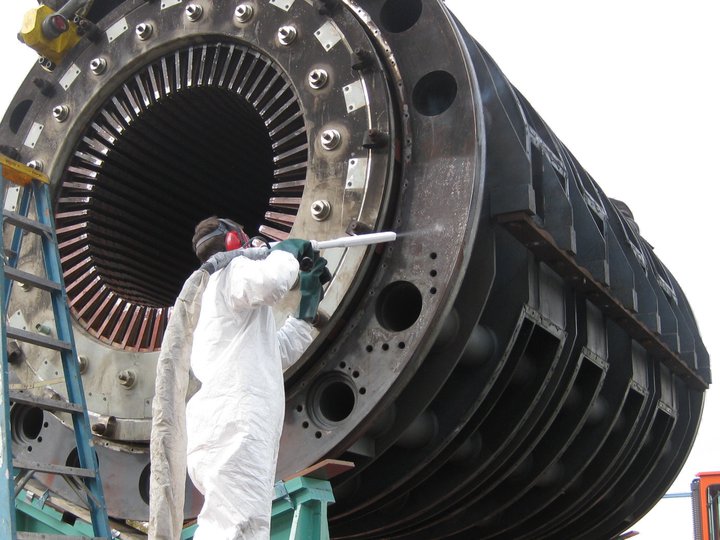
Dry ice blasting is a cleaner, more sustainable alternative to traditional industrial cleaning because it requires no added water, no harsh chemicals, and produces no secondary waste. The dry ice pellets sublimate on contact—turning directly from solid to gas—so there’s no runoff, no slurry, and far less material to dispose of. This reduces cleanup time, minimizes environmental impact, and supports safer working conditions while still delivering powerful results for demanding industrial applications.
Dry Ice Blasting
Dry ice blasting supports cleaner operations, reduces waste, eliminates chemicals, and minimizes environmental impact. Below are the sustainability, health, safety, and compliance benefits that dry ice cleaning delivers across industries.
Sustainability & Environmental Advantages
No Secondary Waste Stream
Dry ice sublimates instantly (solid → gas), leaving only the removed contaminant to capture—no grit, media, or slurry waste.
Reduces or Eliminates Chemicals
Cuts solvent purchases, storage, handling, and disposal, directly minimizing chemical impact.
Minimal Water Use
No wastewater to treat or discharge; ideal for water-conscious facilities.
Lower Cleanup Footprint
Less residue to capture or haul away compared to sand, soda, or wet blasting.
Non-Abrasive Process
Extends equipment life by avoiding aggressive abrasion and reducing replacements.
Circular CO₂ Use
Dry ice is often produced from reclaimed CO₂ rather than newly generated gas.
01
Waste Prevention (Source Reduction)
Cleaning without added media prevents waste generation instead of managing it after.
02
Right-First-Time Cleaning
Reduces re-clean cycles, saving labor, energy, and consumables.
03
Less Packaging & Transport
Fewer chemical drums and media pallets reduce packaging waste and delivery trips.
04
Reduced Landfill & Hauling
No spent grit/media means less waste to haul and lower disposal emissions.