
For decades, perchloroethylene — commonly called PCE or PERC — has been a standard solvent for industrial cleaning and degreasing. That era is ending.
In December 2024, the EPA finalized its risk management rule for PCE under the Toxic Substances Control Act (TSCA), restricting the manufacture, processing, and distribution of perchloroethylene across a wide range of commercial and industrial applications. The rule sets an aggressive phaseout timeline and introduces compliance requirements that fundamentally change how facilities approach cleaning operations.
If your facility still uses solvent-based cleaning methods — whether for degreasing equipment, cleaning production lines, or maintaining machinery — this rule directly affects you.
What the EPA’s PCE Rule Actually Requires
The final rule does several things at once, and the compliance timeline is staggered. Here’s what matters most for industrial operations.
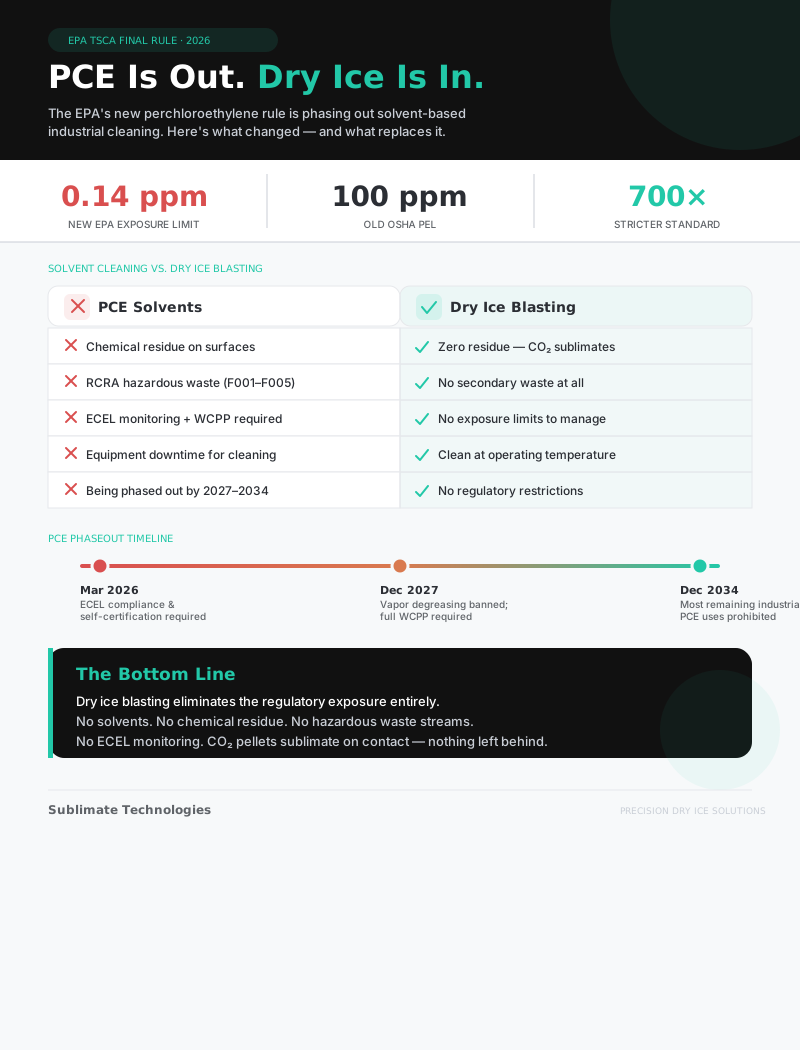
The EPA established a new Existing Chemical Exposure Limit (ECEL) for PCE at 0.14 ppm — a dramatic reduction from OSHA’s longstanding permissible exposure limit of 100 ppm. That’s not a typo. The new standard is more than 700 times stricter than the old OSHA PEL.
Facilities that continue using PCE must develop a Workplace Chemical Protection Program (WCPP) that includes inhalation exposure monitoring, establishment of regulated work areas, respiratory PPE programs, updated labeling, and self-certification of compliance.
On the phaseout side, vapor degreasing — one of the most common industrial cleaning applications for PCE — is prohibited as of December 2027. Most remaining industrial uses face a full ban by December 2034.
The Deadlines Just Shifted — But the Direction Hasn’t
On March 27, 2026, the EPA proposed extending several compliance dates in response to stakeholder feedback that the original timelines were “unworkable.” The proposed extensions push initial inhalation monitoring to June 2027, ECEL compliance and regulated area requirements to September 2027, and full exposure control plan implementation to December 2027 for non-federal entities.
The EPA’s own language is telling — they described the original dates as potentially leading to “rushed, incomplete, or box-checking compliance, which is not protective in practice.”
But here’s what the extensions don’t change: the direction. PCE is still being phased out. Vapor degreasing is still being banned. The compliance infrastructure — monitoring, PPE programs, exposure control plans, recordkeeping — is still required for anyone who continues using the chemical.
The extensions give facilities more runway. They don’t eliminate the destination.
The Real Cost of Staying on Solvents
For manufacturers weighing their options, the compliance math is straightforward. Continuing to use PCE means investing in exposure monitoring equipment and ongoing testing, respiratory PPE programs with fit testing and maintenance, regulated area setup and signage, a documented Workplace Chemical Protection Program, self-certification and recordkeeping, and hazardous waste disposal for spent solvents (RCRA F001-F005 waste streams).
For a mid-size manufacturing facility running four to six cleaning cycles per year, the total cost of ownership for solvent-based cleaning — including chemical procurement, waste disposal, regulatory compliance overhead, labor, and downtime — can run $14,000 to $18,000 per cycle. That adds up fast, especially when the method you’re investing in has an expiration date.
Why Manufacturers Are Switching to Dry Ice Blasting
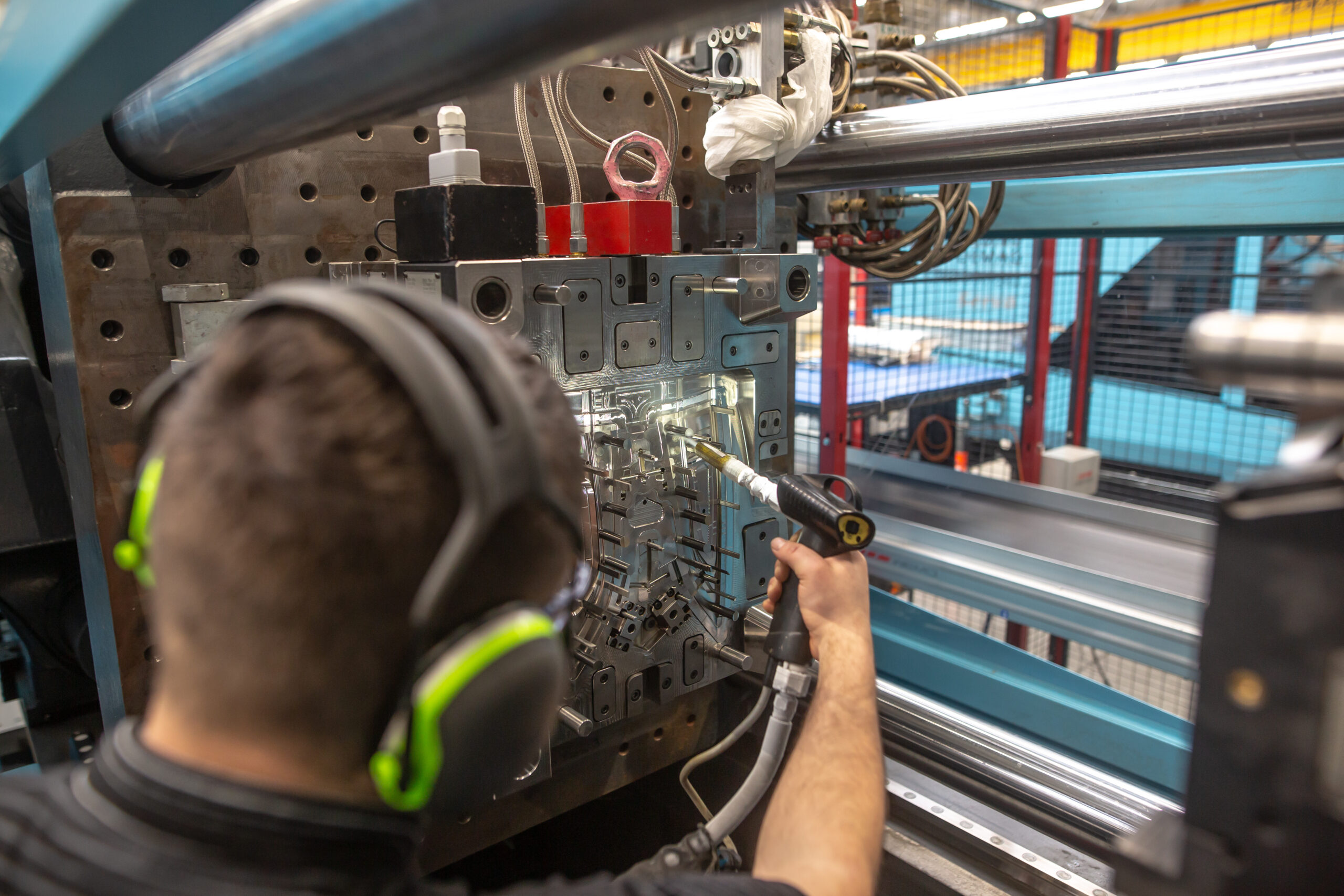
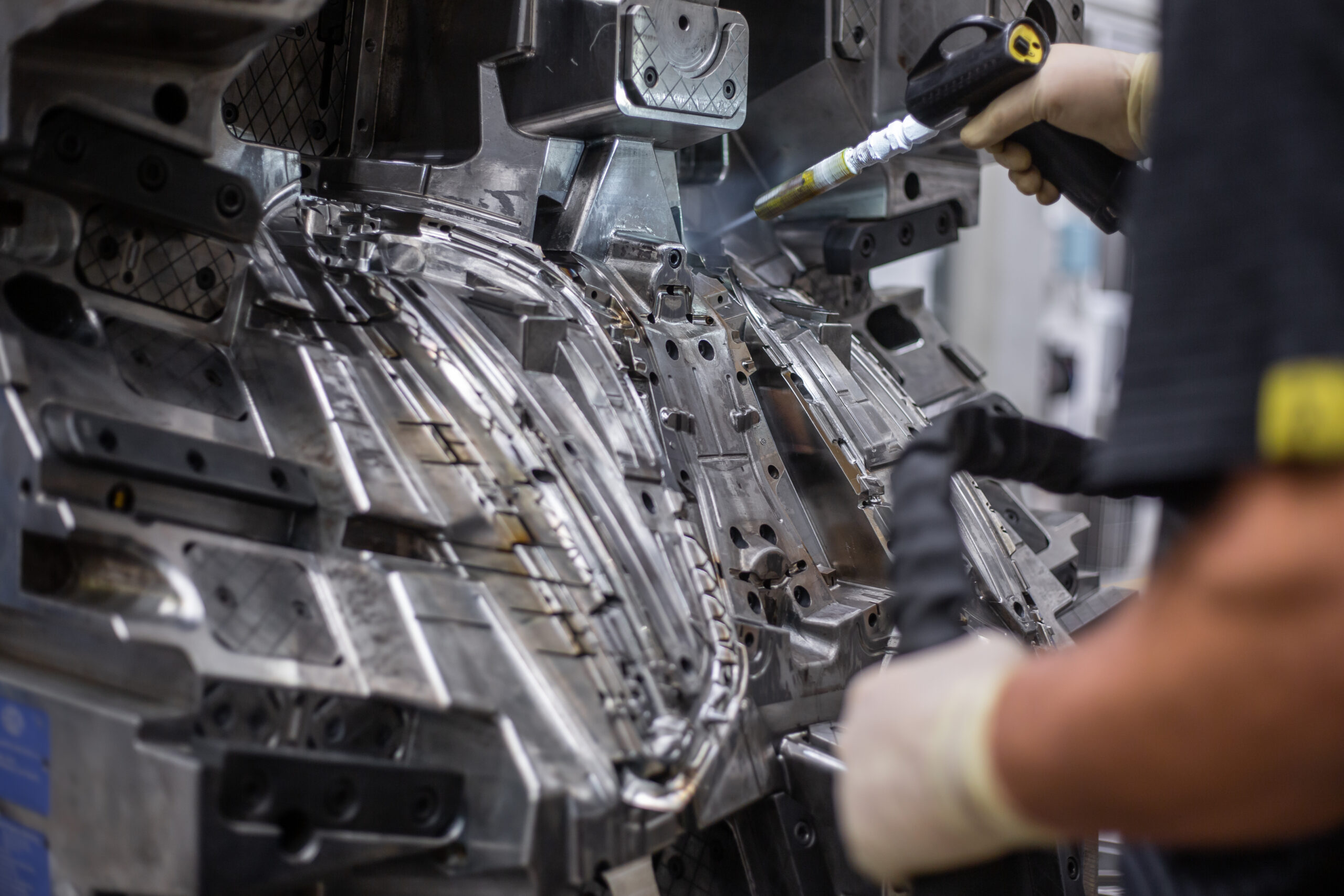
Dry ice blasting uses compressed CO₂ pellets that sublimate — convert directly from solid to gas — on contact with the surface being cleaned. That single physical property eliminates the regulatory burden that makes solvent cleaning increasingly impractical.
No chemical solvents means no ECEL monitoring, no WCPP, no self-certification, and no RCRA hazardous waste streams. No water means no wastewater permits and no NPDES obligations. No secondary waste means no spent media disposal. The CO₂ returns to the atmosphere as gas, and the only thing left behind is the contaminant that was removed.
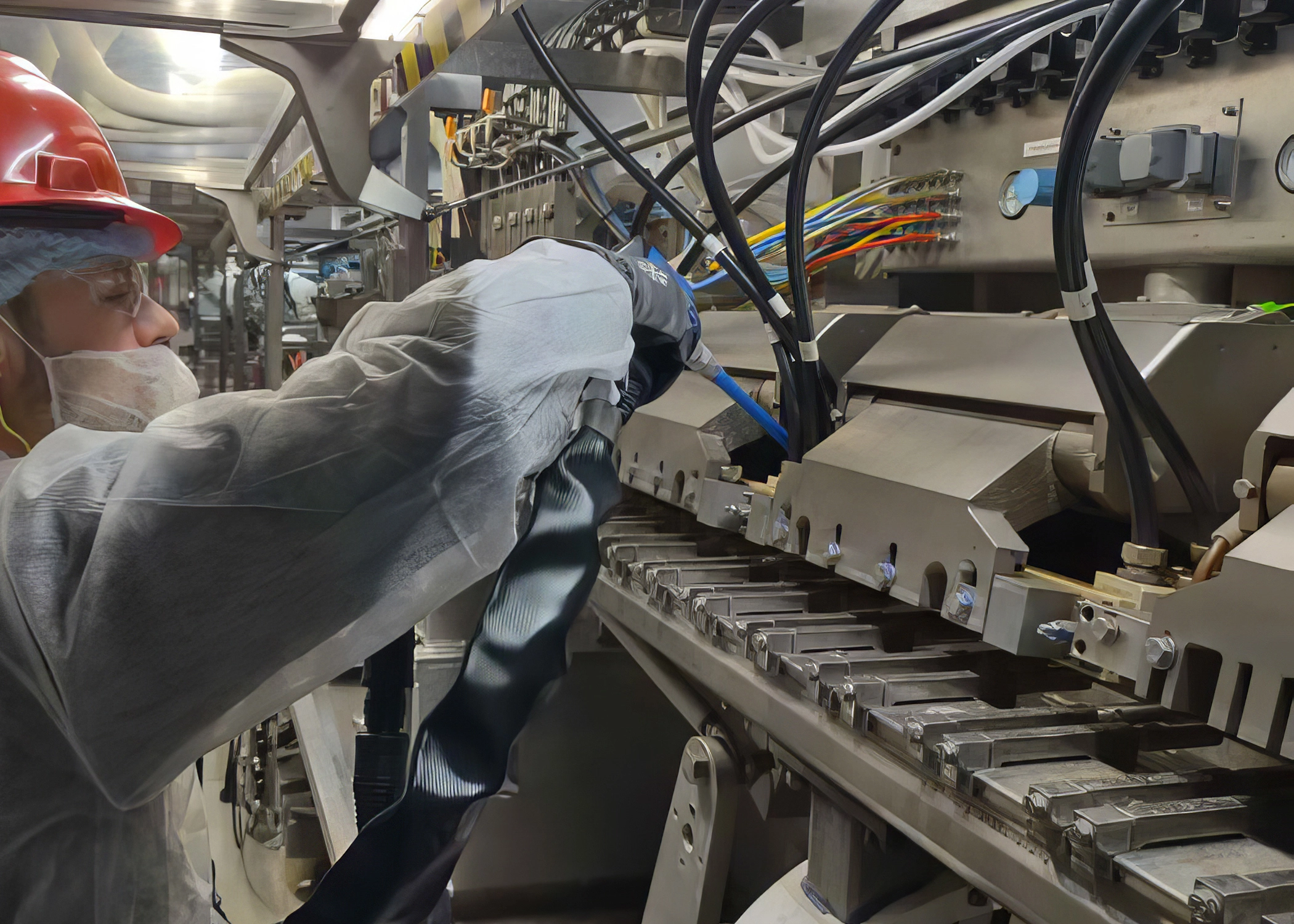
From an operations standpoint, dry ice blasting can be performed at operating temperature without disassembling equipment. Production lines don’t need to be shut down, cooled, or moved to a separate cleaning area. For facilities running tight schedules, that reduction in downtime directly protects throughput.
The compliance case and the operational case point in the same direction: a cleaning method that doesn’t generate the regulatory exposure that solvents now carry.
What This Means for Your Facility
The EPA’s PCE rule isn’t a proposal anymore — it’s final, with a phaseout timeline that’s already in motion. The compliance deadline extensions give facilities additional time to prepare, but they don’t change the trajectory. Solvent-based industrial cleaning is being regulated out of standard practice.
Facilities that make the switch now avoid building compliance infrastructure for a method they’ll eventually have to abandon. They eliminate hazardous waste streams, reduce OSHA exposure risk, and simplify their environmental permitting — all while maintaining or improving cleaning effectiveness.
I spent years enforcing environmental regulations as a federal officer. The pattern is always the same: rules tighten, deadlines arrive, and the facilities that moved early are the ones that aren’t scrambling. The PCE rule is following that pattern.
If you want to see what dry ice blasting looks like on your equipment, we offer complimentary cleaning demos. No obligation — just results you can evaluate against what you’re currently doing.
Contact Sublimate Technologies to schedule a free dry ice blast cleaning demo at your facility.